
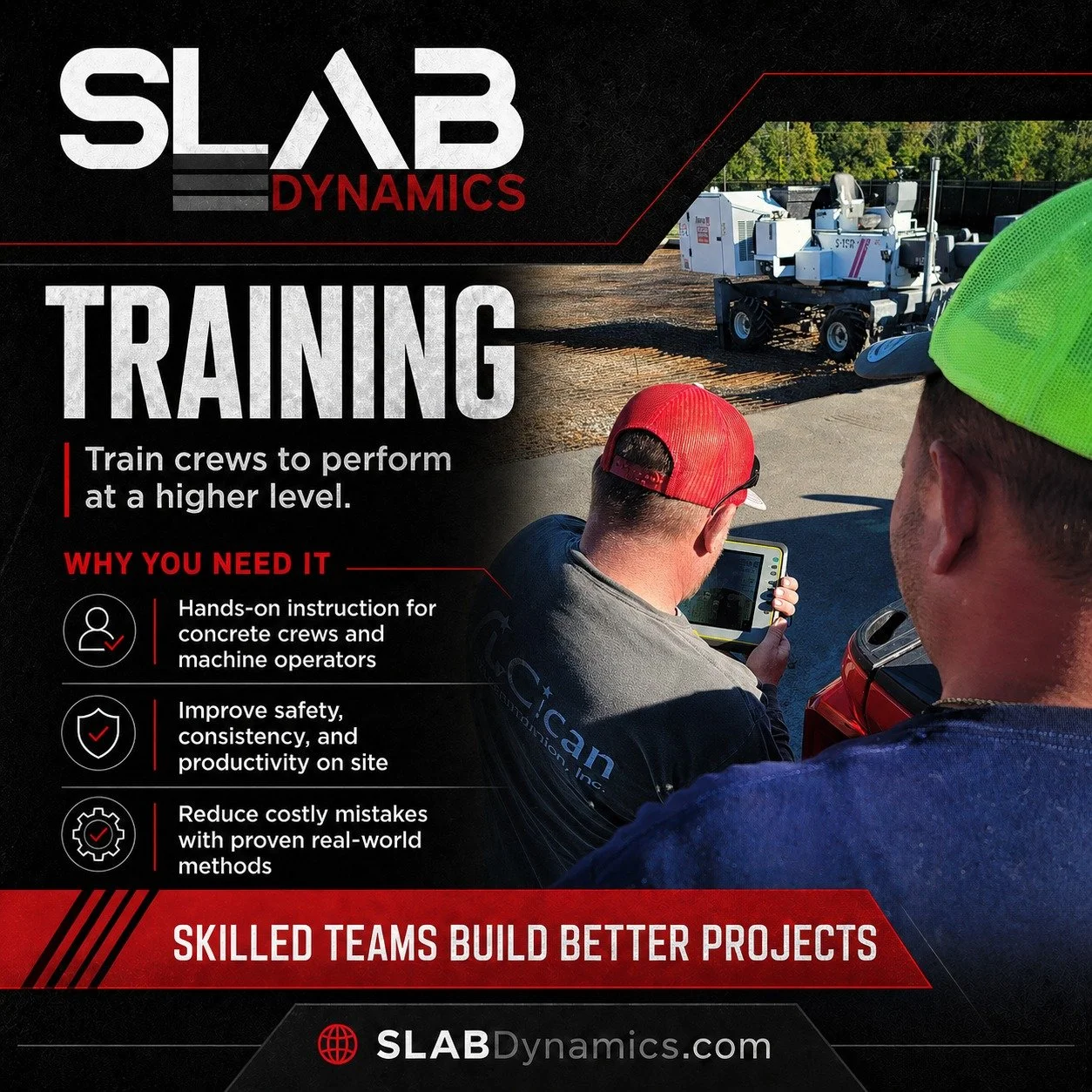
Screed Training for Concrete Contractors: What to Expect from SLAB Dynamics
Your best operator cannot be on every job. Learn how SLAB Dynamics builds screed training around your crew, with shop and field work, practical references and support that can continue after the first session.
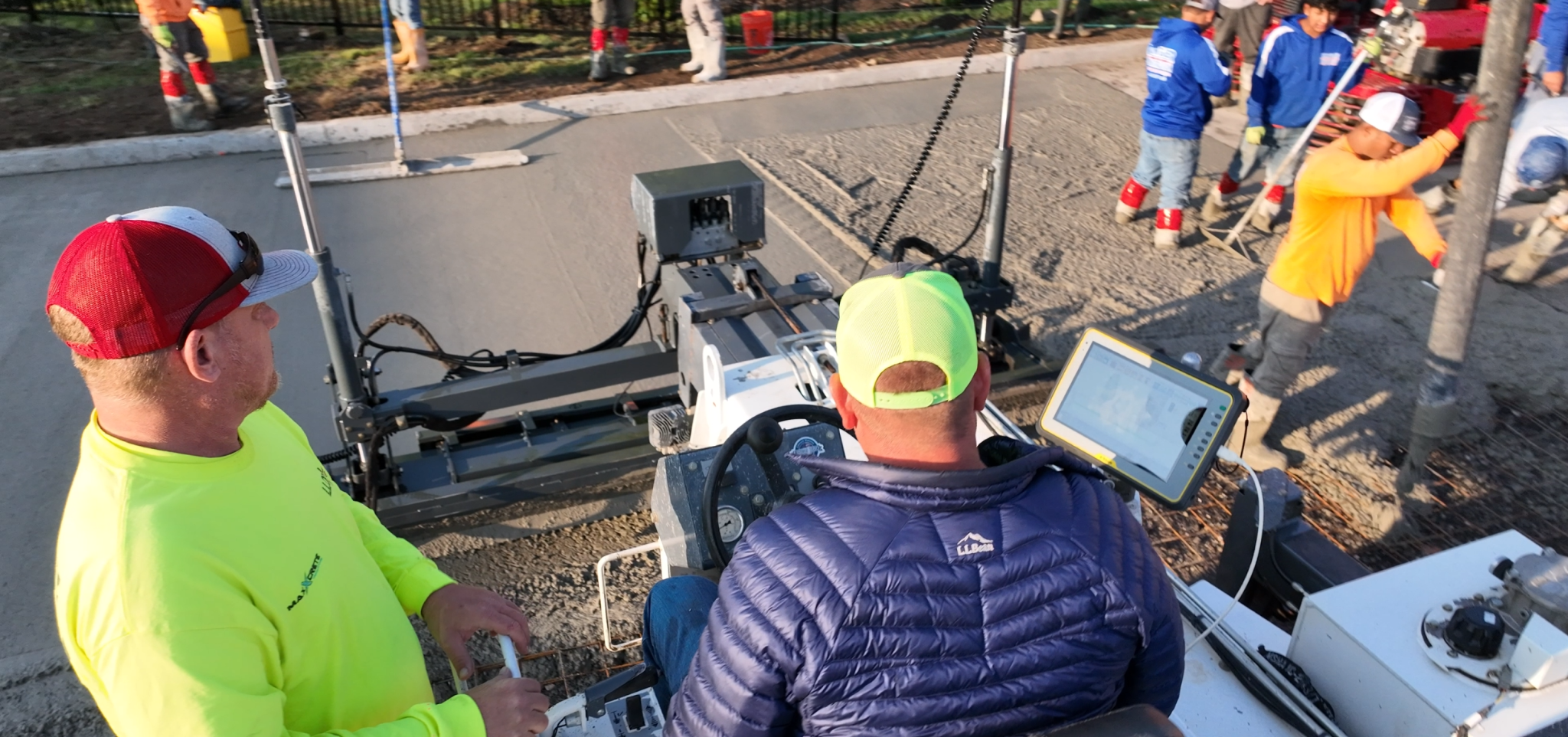
Senior Consultant T. Fritz on site for a 3D Technical Slab screed training
SLAB Dynamics provides hands-on large line screed training for concrete contractors who want more consistent operators and a crew that works from the same process. Your best operator knows the machine. He knows what to check before the pour. When something feels off, he catches it. Then you add another crew. Two jobs land on the same day. Suddenly, the person everyone relies on cannot be everywhere.
That is where training becomes a business decision. Time spent sorting out preventable problems is time you priced to spend placing concrete. You need a way to pass that knowledge on before the next operator has to figure it out under pressure.
At SLAB Dynamics, we build training around your equipment and the work your crew actually does. The goal is to give your newest operator and your most experienced operator a consistent foundation to work from.
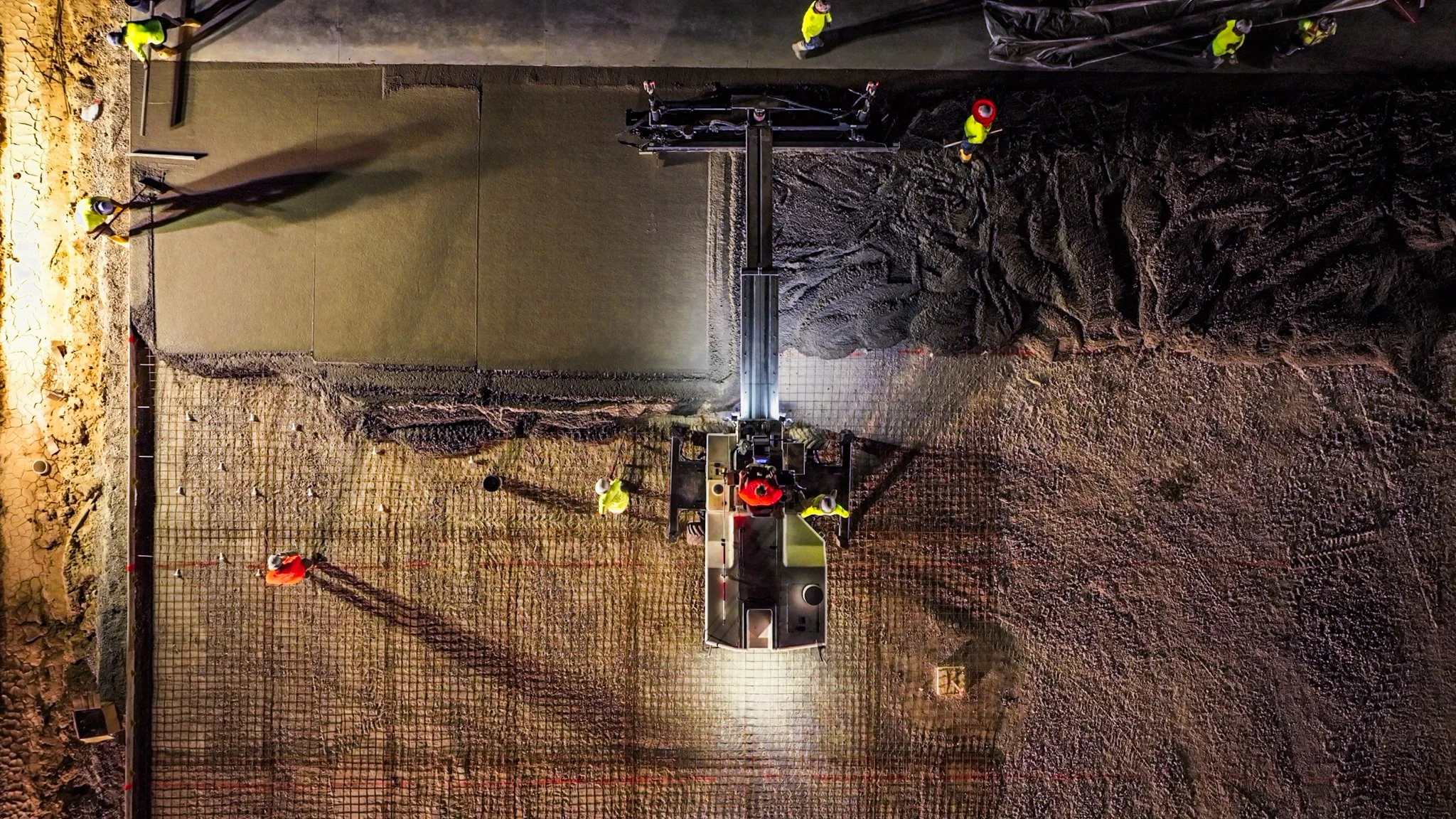
SLAB Dynamics working with Broughton Concrete in KY
Who should consider screed training?
Screed training can help both new operators and experienced crews preparing for more demanding work.
It is worth a conversation when:
One person handles nearly every machine question.
Setup habits change depending on who is operating.
You have added a machine or need to train a backup operator.
Your next project has requirements your crew has not handled before.
An experienced operator may need help with one recurring problem. A newer operator may need a structured starting point. We assess that before building the training plan.
What does SLAB Dynamics screed training cover?
Our Screed training connects machine operation with the placement process around it.
Depending on the agreed scope, training can address:
Machine setup and pre-operation checks.
Laser setup and elevation verification.
Operator technique and machine workflow.
Coordination with the placement and finishing crews.
Troubleshooting recurring performance issues.
Preparation for 3D or technical slab work.
We look at how the machine fits the job. That includes what the operator needs from the crew and how the crew responds when conditions change.
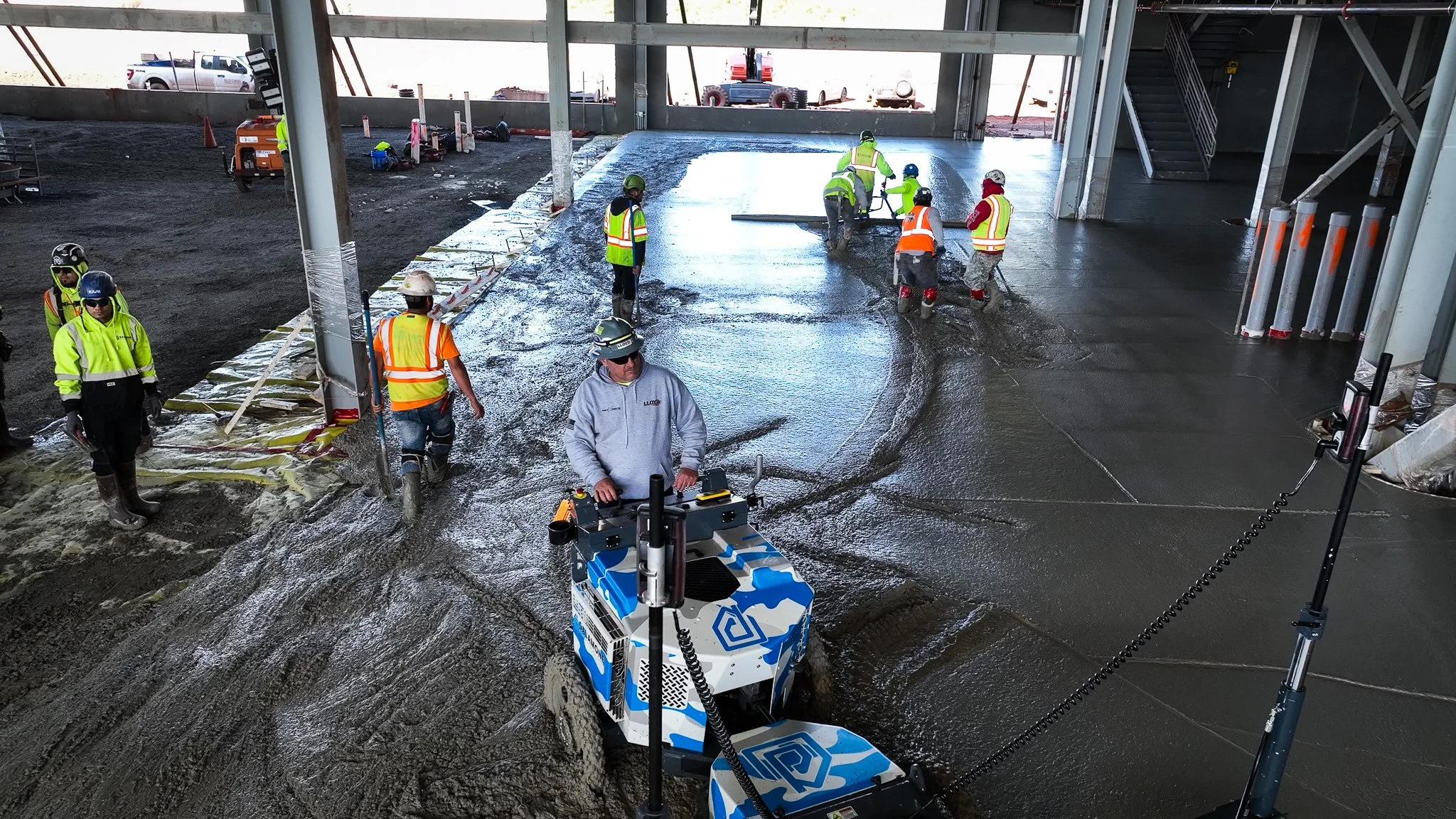
Training with a Ride on at a Data center Technical Slab
How long does training take, and where does it happen?
Our initial training usually takes one to two days and combines shop time with hands-on field work.
The shop portion gives us time to work through the equipment and explain the process. Field work puts that process into practice under jobsite conditions.
The schedule is tailored to the contractor. Your machine, operator experience and project requirements determine what we can cover and whether more time is needed. We confirm the location and format when we scope the work.
What happens after the first training session?
SLAB Dynamics can continue supporting your crew with field references and follow-up training.
We use physical training guides and quick-reference cards to help operators repeat the process after the session ends. That gives the crew something to check when a familiar question comes up.
Follow-up is tailored to the company. It may be monthly or quarterly, depending on crew size and the work ahead. We can revisit weak points as operators gain experience or new projects introduce different demands.
The aim is to make good habits part of the way your company works.
Will training help us meet demanding floor requirements?
Training can strengthen the work that supports floor quality, but a finished slab depends on the full `construction process.
The American Concrete Institute's Guide to Concrete Floor and Slab Construction addresses site preparation, concrete materials, workmanship, finishing and curing. It also emphasizes a preconstruction meeting to establish expectations and procedures.
That is why we ask about the project as well as the machine. A crew preparing for a superflat floor or a complex 3D placement may need a broader review before work begins.
SLAB Dynamics provides superflat and technical slab support. We review the specified requirements with your team and help identify where added preparation or field support would be useful.
Do we need training or onsite consulting?
Training develops your crew's capability; onsite consulting adds experienced support to a specific project.
Your situation -➤ A useful starting point
A new or backup operator needs a consistent process -➤ Screed training
A recurring machine or workflow problem needs attention -➤ Equipment review and targeted coaching
A difficult placement is approaching -➤ Pre-pour planning and project-readiness review
Your team needs added expertise during the pour -➤ Placement-day consulting and field support
Some contractors need both. Our project consulting services can connect preparation with support during the placement.
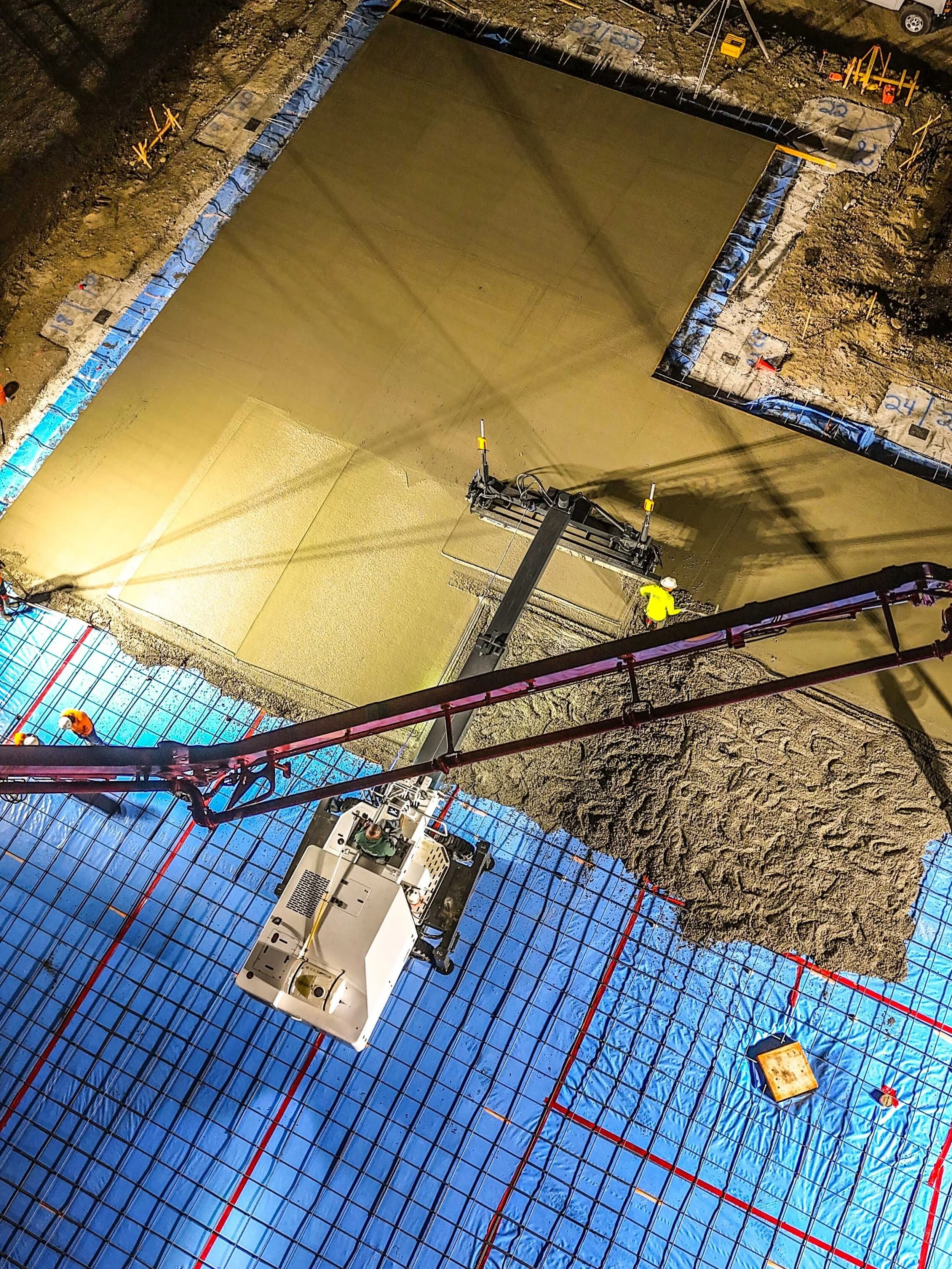
How does SLAB Dynamics help beyond the machine?
SLAB Dynamics supports the field work and the business systems a concrete contractor needs to grow.
Our field support draws on more than 30 years of concrete industry experience. That experience helps us look at the decisions around a placement, including readiness, equipment use and communication between crews.
Field performance: We help teams prepare for difficult placements and work through field problems. That can include pre-pour planning, quality-control support and technical documentation.
Business performance: We help turn the way you work into clear procedures. Training systems and foreman workflows make knowledge easier to pass on. CRM and lead-tracking systems help the office keep up with new opportunities.
Marketing performance: We help contractors document their work and explain their capabilities. Project photography, video and case studies give potential customers something concrete to evaluate. Websites and content help those customers understand where you fit.
These services can be scoped around the problem you need to solve. Explore our business development and marketing support if your next challenge is in the office or in how you reach customers.
How much does Screed training cost?
SLAB Dynamics prices training around the agreed scope and logistics.
An operator refresher requires a different plan from training a crew for unfamiliar equipment or a technical project. We need to understand the machine, the people involved and the work ahead before recommending the right scope.
Send your location and preferred timing with the inquiry so we can account for travel and scheduling.
How do we get started with SLAB Dynamics?
Start by telling us what your crew needs to do better or what project you are preparing to take on.
A useful first inquiry includes:
Your company name and location.
The screed model your crew uses.
The number of operators and their experience.
Your upcoming project, timing and main concern.
You do not need a finished training plan before reaching out. A clear description of the problem gives us a place to start.
Your best operator cannot be on every job. Let's build a process the rest of your crew can use.

The Importance of Precision in Concrete Slab Construction

In the realm of construction, precision is not just a preference; it is a necessity. This is especially true in concrete slab construction, where precision ensures the quality, durability, and safety of structures. Concrete slabs serve as the foundational base for buildings, bridges, pavements, and various other infrastructures. Thus, any compromise in their construction can lead to significant issues down the line. This detailed exploration highlights why precision in concrete slab construction is paramount and how it can be achieved.

Planning and Design: The Blueprint of Precision
The journey to a precise concrete slab begins long before the concrete is poured. It starts with meticulous planning and design. Engineers and architects must work together to develop a blueprint that accounts for the slab's intended use, the load it will bear, and the environmental conditions it will face. This phase involves precise measurements and calculations to determine the slab's thickness, reinforcement needs, and concrete mix. Any miscalculation here can result in weak spots or structural failures. For example, a slab that is too thin may not support the weight of the structure, leading to cracks and potential collapse.
The Significance of Proper Mixing and Pouring
Once the planning and design are complete, the next critical phase is the mixing and pouring of the concrete. Precision in this step is vital to ensure the concrete's strength and durability. The mix must have the correct proportions of cement, water, sand, and aggregate. Too much water can weaken the mix, while too little can make it difficult to work with. Consistent mixing ensures that the concrete cures uniformly, preventing weak points. During pouring, maintaining a steady and even distribution is crucial. Any irregularities can lead to air pockets or voids, which can compromise the slab’s integrity.


Ensuring Structural Integrity: Reinforcement and Curing
Reinforcement is another key aspect of concrete slab construction. Steel rebar or mesh is often used to provide additional strength and prevent cracking. The placement of this reinforcement must be precise, ensuring it is positioned correctly within the slab to bear the load effectively. After pouring, the curing process begins. Proper curing is essential to achieve the desired strength and durability. This involves maintaining the right temperature and moisture levels to allow the concrete to harden gradually. Rapid curing can lead to cracking, while inadequate curing can result in a weak slab.
Technological Advances Enhancing Precision
The construction industry has seen significant advancements in technology, which have greatly improved precision in concrete slab construction. Laser-guided screeds, for instance, ensure that the surface of the slab is perfectly flat and level. GPS mapping allows for precise layout and positioning, ensuring that every aspect of the slab conforms to the design specifications. 3D modeling provides a detailed visualization of the project, helping to identify and rectify potential issues before construction begins. These technologies, when combined with traditional construction techniques, result in a superior quality slab.

The Crucial Role of Skilled Labor
While technology plays a vital role, the importance of skilled labor cannot be overstated. Experienced workers bring a deep understanding of concrete behavior, the impacts of weather, and the nuances of proper finishing techniques. Their expertise ensures that every step of the construction process is executed with precision. Training and continuous education in the latest construction methods and technologies are essential to maintaining high standards of craftsmanship.
Economic and Environmental Implications
Precision in concrete slab construction also has significant economic and environmental implications. High precision reduces the need for repairs and maintenance, resulting in long-term cost savings. It also minimizes waste and improves resource efficiency, contributing to more sustainable building practices. High-quality, durable slabs reduce the environmental footprint of a construction project by extending the lifespan of the structure and reducing the frequency of rebuilds and repairs.

Conclusion
In conclusion, precision in concrete slab construction is crucial for ensuring the structural integrity, safety, and longevity of buildings and infrastructure. Meticulous planning, accurate mixing and pouring, proper reinforcement, and curing, along with the use of advanced technology and skilled labor, all contribute to achieving this precision. The economic and environmental benefits further underscore the importance of getting it right from the start. As the foundation of any construction project, ensuring precision in concrete slab construction is not just a technical requirement but a commitment to quality and sustainability in the built environment.